Stolen History: Nazi-Looted Portrait Discovered in Dutch SS Descendant's Home
A priceless painting plundered by Hermann Göring surfaces, raising questions about art restitution and its dark past.

ARNI
Editor-in-Chief · arni-media.com
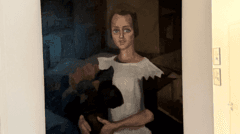
Painting Resurfaces: Nazi Plunder Found in Dutch Home
A priceless relic of humanity's darkest hour has resurfaced in the most unexpected of places: the living room of a Dutch descendant of the infamous SS. As if plucked from the pages of a gripping WWII thriller, this masterpiece — once coveted by Hermann Göring, a man whose lust for power was only rivalled by his lust for art — has emerged to reignite the smouldering debate over art restitution and historical justice.
The painting's journey from the hands of one of history’s greatest villains to a quiet household in the Netherlands is nothing short of a saga. Its reappearance invites questions about the ethics of ownership, the ghosts of history, and the shadowy world of art plundering.
Plundering Europe: Göring's Artistic Reign of Terror
Hermann Göring was more than just a war criminal; he was the self-appointed curator-in-chief of Europe's stolen art. With a voracious appetite for masterpieces and a complete disregard for their rightful owners, Göring orchestrated a systematic looting that stripped the continent of its cultural legacy. Imagine Europe, not as a collection of nations, but as a grand gallery from which the Nazis cherry-picked their spoils.
This isn't just a story of greed. It's about cultural genocide, a term that barely scratches the surface of the horrors faced by Jewish families and other victims whose treasures were methodically seized. It’s not hyperbole to say that Göring and his ilk were cultural pirates, hoarding the beauty of the world in a grotesque display of power and dominance.
The newly found painting is not merely a forgotten treasure; it is an artifact of atrocity, dragging us back to a time when art was wielded as a weapon, brandished to illustrate dominance rather than celebrate human achievement.
The Fractured Road of Art Restitution
The tangled web of art restitution has ensnared countless pieces over the decades, each one a thread leading back to a family devastated by the Holocaust. The process of returning these artworks to their rightful owners isn't just about righting a wrong; it's about restoring a piece of history to its proper place. Yet, this is easier said than done.
Art restitution is a minefield of legal complexities, emotional turmoil, and ethical dilemmas. Provenance, the art world's favorite term, becomes a Pandora's box. Tracing the lineage of a single piece back through time involves navigating international laws, conflicts, and the murky waters of wartime transactions.
In the case of the Dutch discovery, questions abound: Did the current possessor's family knowingly inherit stolen art? Or is this another instance of history's chaos leaving behind a trail of unwitting recipients? These questions reflect a broader issue: our often blind faith in the integrity of art institutions and the murky provenance of so many pieces that fill their halls.
Impact on Ordinary Lives
For the average person, the story of a stolen painting might seem distant, a tale confined to museum corridors and auction houses. But consider the families who once owned these works. For them, restitution is a tangible connection to lost loved ones, a symbol of survival, and a means to reclaim a stolen part of their heritage.
Imagine a lifetime of memories, family stories passed down around a painting that once hung in a grandparent's home. The loss isn't just financial; it’s a cultural amputation. For these families, the return of a painting isn't just the end of a legal battle; it's a victory over an erasure attempted by one of history's greatest evils.
Yet, let's not be naive. Not everyone rejoices at these discoveries. For those who unknowingly inherit these dark heirlooms, there’s a harsh awakening. They are thrust into a moral quagmire: fight to keep their inheritance or surrender it in the name of justice.
Winners, Losers, and the Road Ahead
Much like art itself, the outcome of these discoveries is subjective. Art historians and legal experts might view the unearthing of Nazi-looted art as a win for justice and historical accountability. Meanwhile, families tangled in restitution claims find themselves navigating the relentless bureaucracy and legal fees that accompany such processes.
The real losers, though, are those who cling to the fading myth that the past can be buried. This latest discovery proves that history will not remain quietly in the shadows. It rises, demanding acknowledgment and resolution.
Looking forward, the art world must brace for more upheaval. As technology advances, so too does our ability to trace the twisted roots of art's provenance. Museums, private collectors, and even humble inheritors must prepare for the inevitable revelations that will continue to surface.
The question isn't if more cases will emerge, but when. As these stories unfold, we must decide, as a global community, how we balance justice with history, ownership with restitution, and memory with responsibility.
Share this story
Stay in the loop
Get ARNI's best stories delivered to your inbox. No spam, unsubscribe anytime.
Subscribe Free →ARNI
Editor-in-Chief · arni-media.comIndependent news publisher and founder of ARNI News. Covering breaking global news, politics, business and technology with clarity and depth.


