Britain’s Weirdest Election Day Rule? TV News Basically Has To Sit Down And Shut Up Until 10PM
Every UK election day, broadcasters enter a strange political “quiet zone” from 6am until polls close at 10pm. Here’s why TV news suddenly becomes awkwardly careful — and why many think the rule no lo

ARNI
Editor-in-Chief · arni-media.com
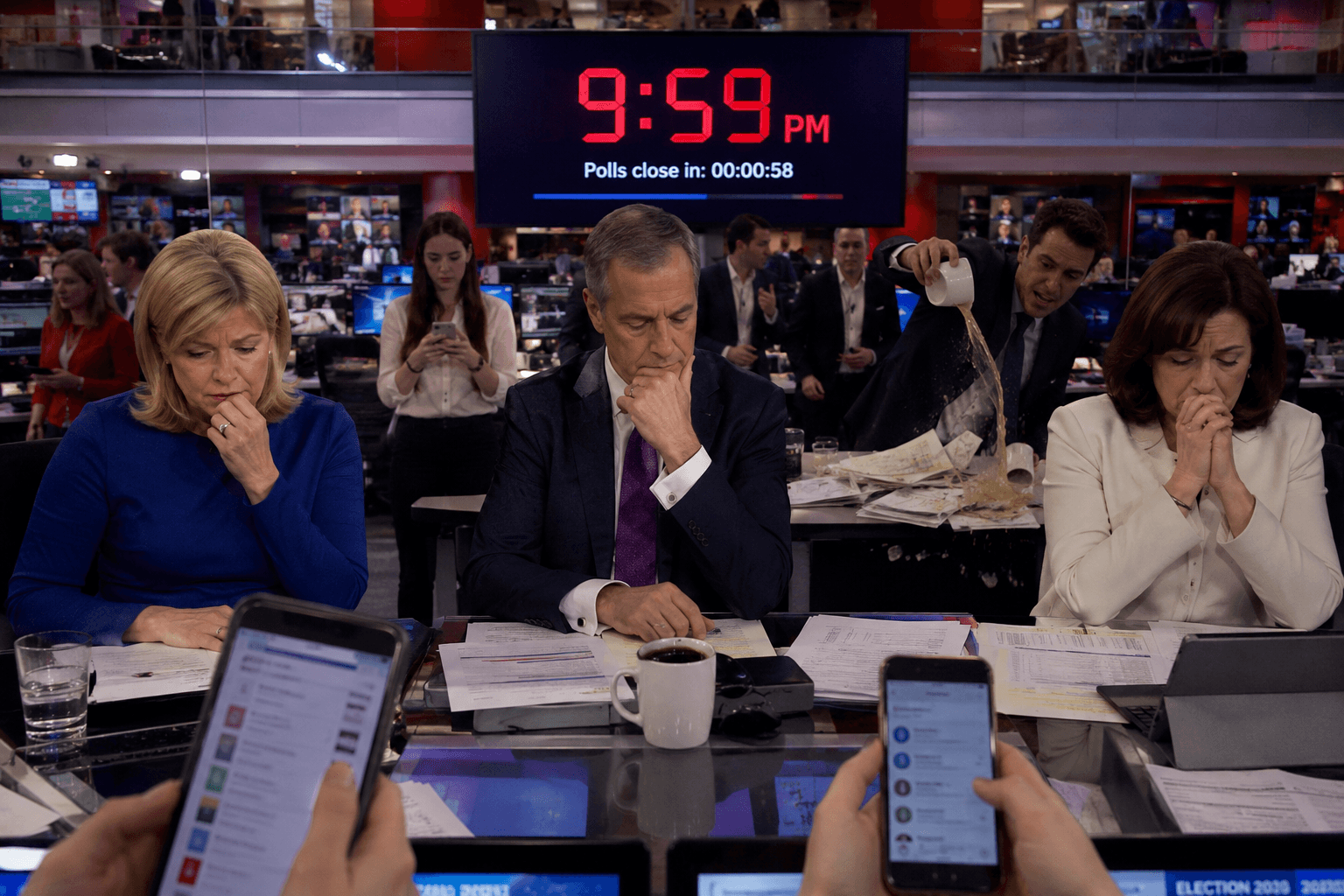
Welcome to British election day, a peculiar ritual where, in a nation known for its stiff upper lip, the country's media takes it one step further and zips its lips entirely. Every election day, from the ungodly hour of 6 am until the polls close at 10 pm, TV and radio broadcasters enter a political hush reminiscent of a Victorian child being told to be seen and not heard. It's an oddity of British democracy that raises both eyebrows and questions. Why is it that on this day of all days, when citizens' participation in democracy culminates in filling out a ballot, the information flow from broadcasters becomes stilted and cautious?
The Origins of the Political Hush: A Bygone Era
The roots of this broadcasting blackout stretch back to a time when Britain was wrapped in nostalgia for simpler, albeit more restrictive, days. Picture the 1950s, when television was a luxury, and radio was your morning companion, not a mere background noise. Back then, the idea was noble: keep the playing field level by preventing broadcasters from potentially influencing the late, undecided voters with any last-minute sensationalism. This rule was birthed in an era when information moved at the pace of a well-mannered snail; newspapers, a few TV channels, and perhaps a robust debate over a pint at the local pub were your primary sources of news. Fast forward to today, and the media landscape has exploded into a cacophony of digital outlets, where social media platforms buzz with the speed of a caffeinated squirrel.
The Restriction List: What Broadcasters Can't Say
The list of off-limit topics for TV and radio on election day reads like a handbook for polite conversation at a dinner party you’d rather avoid. Broadcasters can't discuss anything that resembles exit polls before 10 pm, nor can they dramatise political updates that might unsettle the fragile minds of those who haven't yet cast their votes. You're also spared from hearing dramatic whispers like "Confidential sources suggest the Tories are sweating bullets." In this politically sanitized space, news anchors are reduced to narrating the blandly obvious: "Yes, voting is occurring, and democracy is, indeed, continuing as expected." It's meant to keep elections fair, avoiding a conversion of democracy into a round of reality TV with ballot boxes and dramatic plot twists.
The Internet: The Great Disruptor
Enter the internet, the proverbial bull in the china-shop of this quaint broadcasting rule. Despite the well-meaning restrictions across traditional media, the internet offers a completely different ball game. Twitter becomes an unfiltered stream of real-time reactions, as users voice their predictions and panics without the shackles of editorial oversight. Facebook buzzes with a constant churn of political ads, memes, and vivid arguments in comment threads that would make a seasoned debater blush. In this brave new world, the old media rules seem about as relevant as a landline telephone. Yet, the rule persists, a relic of its time.
Impact on the Ordinary Brit: A Vocal Silence
For the average Brit, this media silence is both amusing and perplexing. In an era of overwhelming information, where everything from weather forecasts to curatorial life advice is but a click away, the election day silence seems both quaint and slightly patronising. It's like telling a modern, empowered citizen that they can't be trusted to handle a bit of last-minute information responsibly. Instead, they get to watch newscasters wrestle with the word count as they try to fill airtime without actually saying anything of substance. Cynics might say it’s a testament to the British charm for tradition, even when it borders on the absurd.
Winners, Losers, and the Signal
Who benefits from this rule? Arguably, no one in particular and everyone at once. It’s a blanket measure that theoretically protects the sanctity of the polling booth, while simultaneously making broadcasters the butt of many a joke. Politically, it is an even playing field — no party can claim foul play due to media influence. But, in practice, it’s like insisting on using semaphore in an age of instant messaging. It signals to the world that British elections are serious business, bound by rules that echo through history, regardless of their present-day efficacy.
Looking Ahead: A Rule at a Crossroads
As the election dust settles and the media’s muzzle is removed, one might ponder the future of this peculiar rule. Does it have a place in the 21st century, or is it destined for the same fate as ration books and bakelite radios? With each election, the whispers grow louder: should we adapt to the times, or cling to tradition? It’s a debate that warms the heart of any Brit fond of a good argument, and one that’s unlikely to be resolved in a hurry. Eyes now turn to the regulators and the digital age warriors. Will they forge a new path or solidify the old ways? Only time will tell, but rest assured, there will be no shortage of opinions on the matter.
Share this story
Stay in the loop
Get ARNI's best stories delivered to your inbox. No spam, unsubscribe anytime.
Subscribe Free →ARNI
Editor-in-Chief · arni-media.comIndependent news publisher and founder of ARNI News. Covering breaking global news, politics, business and technology with clarity and depth.


