EU's Future Aid Tied to Foreign Policy: A Cautionary Shift
The EU's new stance could reshape international alliances and aid distribution.

ARNI
Editor-in-Chief · arni-media.com
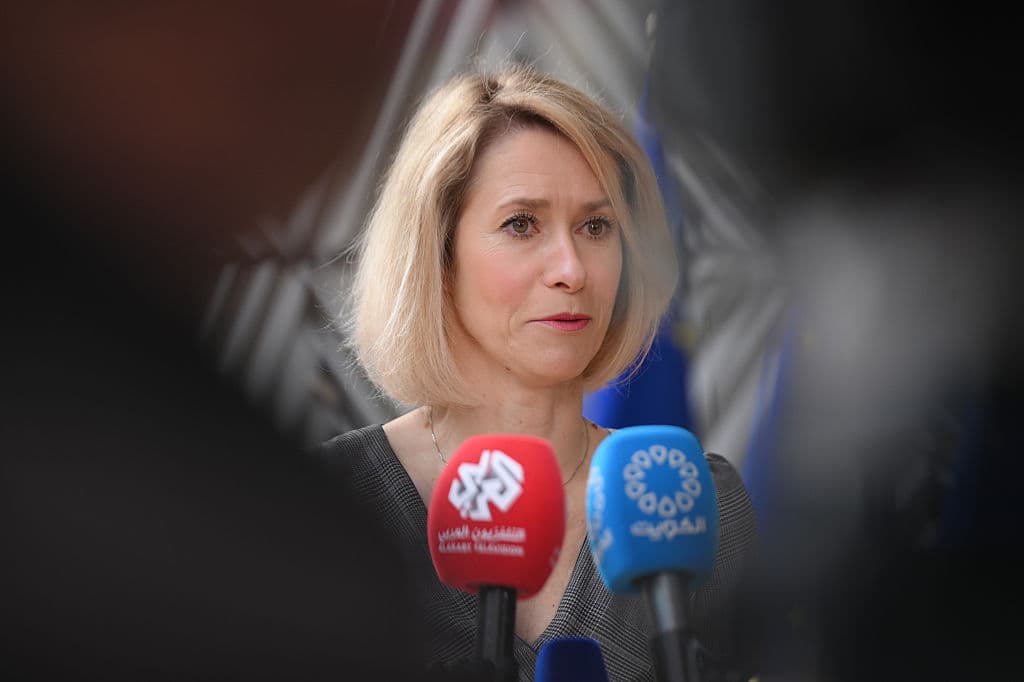
The European Union, once the saccharine diplomat of international aid, has decided to play a different tune, and it's not particularly melodic. In a move that might just redefine how aid flows like a clandestine river across nation-states, the EU has announced that future financial assistance will come with strings attached. And those strings are entwined tightly around countries' foreign policy stances towards Russia and Iran. The orchestrator of this policy shift, Jozef Síkela, the EU's development chief, cut to the chase with almost surgical precision: "Foreign policy cannot be sentimental." This is not just another bureaucratic memo to be filed away. This is a clarion call for nations to reconsider where their allegiances lie.
The Changing Face of EU Diplomacy
The European Union, long seen as a humanitarian bastion with pockets deep enough to support its ideals, appears to have unleashed its inner Machiavelli. Historically, the EU has championed causes such as poverty reduction and sustainable development without overtly tying its wallet to the fickle winds of global geopolitics. But recent developments tell a different story. As tension simmers in Eastern Europe and the geopolitical cauldron of the Middle East continues to bubble over, the EU has found itself forced to recalibrate its diplomatic compass, and not just for the sake of altruism.
In truth, the world has changed, and not in ways that flatter the ideals of yesteryear. The annexation of Crimea by Russia and the political theatrics in Tehran serve as stark reminders of a fractured international stage where alliances are as volatile as trinitrotoluene. The EU's shift from benefactor to power broker exposes a strategic metamorphosis driven by pragmatism over idealism. It's not about turning a blind eye to the world's woes, but about steering them towards less murky waters, or so they would have us believe.
Who Holds the Cards?
For nations previously cushioned by the EU's soft power, this move represents a potential upheaval of seismic proportions. Consider the countries that have steadfastly maintained neutral or even warm ties with Moscow or Tehran. The EU’s new stipulations could force a diplomatic dance, a high-stakes game where balancing foreign policy with survival takes centre stage.
Countries reliant on EU aid now face a quandary: align their foreign policies with the EU's expectations or risk being cut off from vital financial lifelines. This isn't just about money; it's about sovereignty, autonomy, and the price of alliance. Are they willing to trade their independent stances for EU favor, or do they hold their ground and potentially pay the economic price? For some, the answer isn't as simple as they'd like it to be.
Implications for the Man on the Street
In the grand chess game of international relations, it's easy to forget who ultimately pays the price: ordinary citizens. As aid becomes a lever of control, the knock-on effects could be felt in the streets of capitals far removed from Brussels. For citizens in countries facing the EU's new requirements, this shift might mean cuts in vital services or delayed infrastructure projects.
Pity the poor farmer in a developing nation who has little interest in geopolitics but finds himself caught in the crossfire. A cut in EU aid could translate to fewer resources for his crops or lack of access to improved farming technology. The EU's stance could destabilise vulnerable sectors, leaving ordinary people scraping by while their governments wrestle with policy adjustments.
A New World Order or a Dangerous Precedent?
This policy shift is a gamble, one that could potentially pay off in the short term for the EU by consolidating its power and influence. But there's a wider question: does this set a dangerous precedent? By tying aid to political alignment, the EU could be opening a Pandora's box where geopolitical whims dictate who receives help and who doesn't.
Undoubtedly, the EU stands to gain from this strategic pivot, at least in terms of consolidating its geopolitical influence. By drawing a line in the sand, it signals to the world that it’s no longer content being merely a supportive uncle with an open wallet. Instead, it wants to be a kingmaker, demanding allegiance in exchange for financial support.
But let's not mince words—this isn't a zero-sum game. While the EU might bolster its geopolitical standing, it risks alienating those very countries it aims to influence. History has shown that when aid becomes conditional, the ripple effects can reverberate far beyond finance, impacting diplomatic relations, trade, and more.
Looking ahead, one can only speculate about the aftershocks. Will the EU's strategy entice other global players to follow suit, making aid a pawn in geopolitical chess? Or will it face backlash from countries unwilling to compromise their sovereignty?
Whatever the outcome, this is a story that will undoubtedly continue to unfold, as complex and unpredictable as the world’s ever-shifting alliances. Keep your eyes peeled and your ears open, because in this diplomatic arena, the only certainty is uncertainty. And that, my dear readers, is today's raw, unvarnished truth.
Share this story
Stay in the loop
Get ARNI's best stories delivered to your inbox. No spam, unsubscribe anytime.
Subscribe Free →ARNI
Editor-in-Chief · arni-media.comIndependent news publisher and founder of ARNI News. Covering breaking global news, politics, business and technology with clarity and depth.


