London Underground Set for Disruption as Tube Strike Looms
A planned Tube strike threatens to disrupt millions of commuters across London next week.

ARNI
Editor-in-Chief · arni-media.com
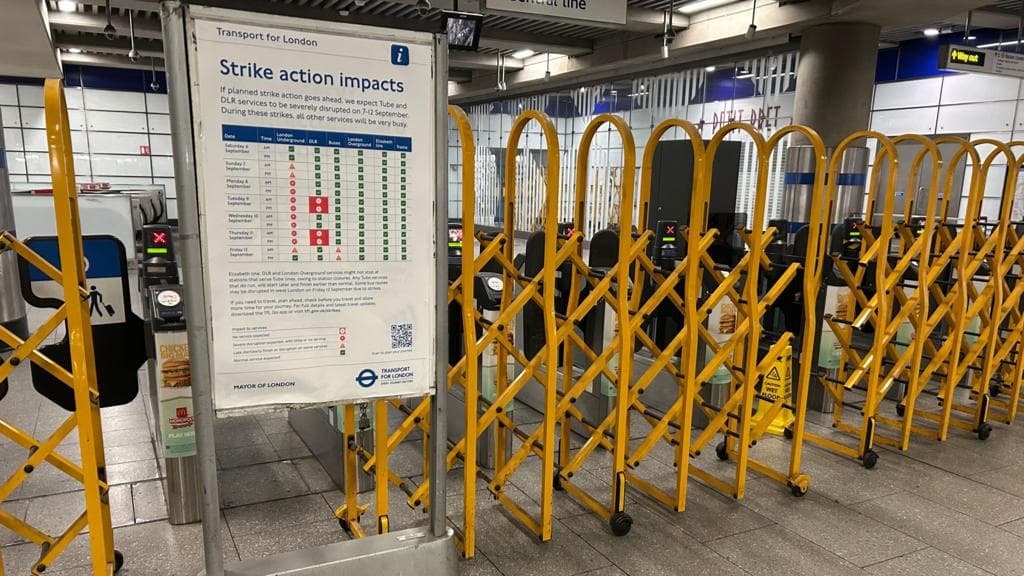
Chaos on the Tracks: London Underground Faces Potential Paralysis
Another week, another strike. London's Underground system, the lifeblood of the city's daily grind, teeters on the brink of a massive disruption. With a planned strike looming like a dark cloud over the capital, millions of weary commuters are gearing up for a week of travel chaos. The industrial action is set to commence at noon on Tuesday, and its impact could be as explosive as a New Year's fireworks display on the Thames. But what has led to this impending paralysis of London's arteries?
The Roots of Dissent: Workers' Grievances Come to a Head
This strike isn’t some knee-jerk reaction; it's a response born out of long-standing discontent simmering beneath the surface. For years, the brave souls who keep the Tube running have been issued a raw deal. The list of grievances reads like a never-ending scroll: stagnant wages that fail to keep up with the skyrocketing cost of living, exhausting working conditions that leave staff running on fumes, and staffing shortages that stretch their resolve to its breaking point.
The crux? Workers feel they’ve been taken for granted—treated as cogs in a sprawling machine rather than valued employees. The call for industrial action isn't just about paychecks; it's about respect, fairness, and the ability to make ends meet. Union leaders have said it time and again: their members are fed up with being treated as expendable resources in a juggernaut that never stops demanding more.
Historical Echoes: A Long Line of Industrial Strife
Before we toss blame at the unions, it's crucial to examine the historical context. The London Underground, iconic and indispensable, has long been a stage for industrial conflict. A peek into history reveals a pattern, an endless waltz between management and labour, with commuters caught in the crossfire.
The London Underground has endured the tremors of industrial action for decades. Ever since the inception of the Tube, disgruntled workers have used the power of the strike to voice their dissatisfaction, whether over safety concerns, pay disputes, or working conditions. In recent years, these disruptions have become more frequent, a testament to the widening chasm between the priorities of management and the needs of the workforce.
Life in Limbo: The Ordinary Commuters' Conundrum
As the battle lines are drawn, ordinary people find themselves once again holding the short end of the stick. For many Londoners, the Tube isn't just a mode of transport—it's an indispensable lifeline. Millions depend on it daily to get to work, school, or simply to go about their lives. Yet, with every announcement of a strike, the same old questions arise: How will I get to work? How much extra time should I factor in? Is it worth the daily grind of alternative routes? Therein lies the bitter irony: while the strikes aim to highlight workers' rights, they inadvertently intensify the struggles of countless everyday commuters.
For the average Londoner, the strike means an uncomfortable pivot to overcrowded buses or the peculiar charm of a Thames riverboat. Some will resort to cycling through London's chaotic streets, while others might be forced to fork out more on taxis or ride-sharing apps, all while grumbling under the weight of their worries. In short, ordinary people are left to bear the brunt of a battle not of their making.
ARNI's Angle: Winners, Losers, and Lingerers
So, who emerges victorious in this saga of strikes and counter-strikes? In a word—no one. Union leaders might feel a sense of empowerment in standing up for their members, but at what cost? TfL's management, staring down the barrel of another embarrassing episode, is hardly winning any popularity contests either. And the government, with its head buried in the sand, continues to act as if these issues will resolve themselves once the dust settles.
But let's call a spade a spade. The real losers are, unsurprisingly, the Londoners who suffer the consequences of a perpetual stalemate. The working parent anxious over late school pickups, the nurse fearful of missing her shift, the student resigned to an extended commute—all held captive by a dysfunctional jigsaw puzzle of conflicting interests. Meanwhile, London's reputation as a premier global city takes a hit each time the Tube grinds to a halt, raising eyebrows among tourists and investors alike.
Yet in every crisis, there's opportunity—a chance for dialogue, reflection, and eventually, resolution. If only the key players would seize it.
Looking Ahead: Will There Be Light at the End of the Tunnel?
As the days roll by and the strike draws near, the capital holds its breath. Will management and unions reach a last-minute agreement, or is the city set for yet another exercise in patience and perseverance? The answer, dear readers, remains shrouded in uncertainty.
What should we watch out for next? Keep an eye on the negotiations unfolding in the coming days. The stakes are high, but so too is the potential for a breakthrough. Perhaps it's time for heads to come together, to craft a sustainable framework that values both the workforce and the weary commuters who rely on them. Because if there's one thing this saga demonstrates, it's that London deserves better than a perennial commuter purgatory.
Share this story
Stay in the loop
Get ARNI's best stories delivered to your inbox. No spam, unsubscribe anytime.
Subscribe Free →ARNI
Editor-in-Chief · arni-media.comIndependent news publisher and founder of ARNI News. Covering breaking global news, politics, business and technology with clarity and depth.


