Romanian President Calls for Increased Defense Spending Amid Regional Tensions
At the B9 Summit, Romania's leader urges allies to bolster defense budgets in light of growing security challenges.

ARNI
Editor-in-Chief · arni-media.com
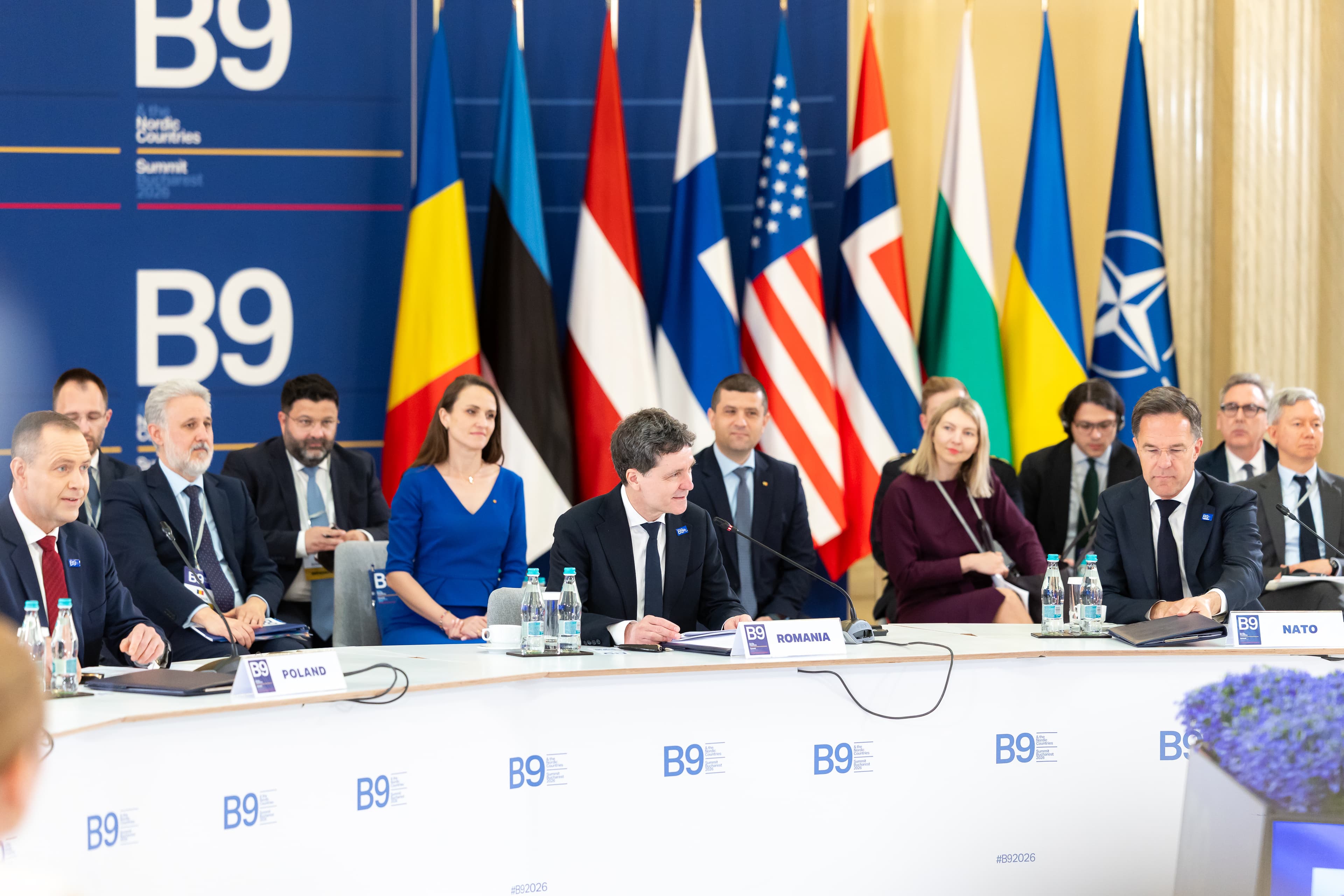
Romania's Military Gamble: A Bold Plea at the B9 Summit
Romanian President Klaus Iohannis recently left no room for ambiguity at the B9 Summit, urging his fellow NATO eastern-flank members to beef up their defense budgets. This wasn't just a genteel suggestion over a polite diplomatic dinner. It was a direct and unyielding demand — akin to a captain telling his shipmates to brace for an impending storm. Iohannis has put the cards on the table, highlighting the geopolitical tumult that has gripped Eastern Europe and making it clear that dithering is not an option. Romania, right on the edge of NATO, finds itself wedged tightly between a Ukraine unraveling at breakneck speed and a Russia whose ambitions are as clear as mud. There's no mistaking the strategic weight Romania holds in this precarious balancing act.
Back to the Future: Lessons from the Past
Eastern Europe has never really emerged from the shadow of the Iron Curtain, even if some might have wished otherwise. The annexation of Crimea by Russia in 2014 was a reality check, a warning bell that the ghosts of the Cold War were anything but buried. For Romania, these events were a stark reminder that peace is never guaranteed, only temporarily secured. As history lessons go, they're seldom comforting. When you live next to a giant with a penchant for territorial acquisition, you don't take peace for granted.
Romania's historical context has always been one of vigilance. The scars of past conflicts are etched deeply into the national consciousness. It has been over thirty years since the Romanian Revolution freed the nation from the shackles of communism, yet the path to stability and assured security remains fraught. President Iohannis's call for increased defense spending is as much about ensuring survival as it is about projecting strength. He knows full well that the region's peace is only as solid as its weakest link. And Romania, keen to avoid being that weak link, is rallying the troops — literally and figuratively.
The Players in the Geopolitical Chess Game
The B9 Summit, consisting of nine NATO Eastern European states, has become a vital platform for aligning strategies against potential threats. Poland and the Baltic states have often been vocal about the Russian bear prowling in their neighborhood. Yet, it's Romania that has taken the spotlight. With a coastline on the Black Sea, a mere stone's throw from contentious Russian territory, Romania holds a frontline position which cannot be underestimated.
President Iohannis's allies include Poland, with its vision for an Intermarium alliance stretching from the Baltic to the Black Sea, and Hungary, albeit with its sometimes ambiguous approach to EU and NATO policies. The B9 countries have found themselves in the precarious position of trying to unite under a common cause, without letting individual national interests sow discord. It's a political tightrope that requires skillful negotiation, not just rhetoric.
What It Means for the Everyday Romanian
The demands for increased defense spending are likely to ripple through the Romanian economy directly affecting ordinary citizens. More money for defense means less for social programs, infrastructure development, or educational reforms. It's not as if Romania is bursting at the seams with spare cash; each Leu must be stretched to its limit. Yet, there are those who understand and, indeed, support this shift in fiscal priorities. After all, if national security is compromised, everything else is forfeit.
In a post-pandemic world where budgets are already strained, the specter of devoting even more resources to the military could be seen as a bitter pill to swallow. Yet, for many Romanians, this pill is sweeter than the prospect of once again being under the influence of foreign powers. National pride and survival instincts are potent drivers, and they may well convince the populace that today’s sacrifice is tomorrow’s promise of peace.
ARNI's Take: Winners, Losers, and What Lies Ahead
Who benefits from Iohannis's call to action? Certainly the defense sector, poised to rake in government contracts for new equipment and technology. There's potential here for increased employment in industries related to defense production. That's a win if you're an optimistic economist. But, let's not kid ourselves; increased military spending seldom leads to mass celebrations in the streets.
Conversely, those attached to social spending programs may find themselves clutching the short straw. Rhetoric about tightened belts and sacrifices for the greater good often falls on deaf ears when your train service is cancelled or hospital wait times balloon to absurd lengths.
President Iohannis has signaled a shift in priorities — a determination to not be left vulnerable in an increasingly volatile region. It’s a bold move, one that is as fraught with risk as it is with promise. But then, when you live in Eastern Europe, boldness is not so much a choice as it is a necessity.
As the dust settles on the latest B9 Summit, all eyes will be on the Russian-Ukrainian border, watching for hints of the next geopolitical move. The question is not just what Romania will do next, but how the threads of regional alliances will weave together — or unravel — under the pressure.
Share this story
Stay in the loop
Get ARNI's best stories delivered to your inbox. No spam, unsubscribe anytime.
Subscribe Free →ARNI
Editor-in-Chief · arni-media.comIndependent news publisher and founder of ARNI News. Covering breaking global news, politics, business and technology with clarity and depth.


