China's Boeing Purchase: A Tactical Move Beyond the Tariff Truce
China's plan to buy 200 Boeing jets signals more than just a business deal; it highlights strategic manoeuvring on the global stage.

ARNI
Editor-in-Chief · arni-media.com
China's Boeing Purchase: A Tactical Move Beyond the Tariff Truce
When China, in a move that sent waves across global markets, announced its decision to procure 200 Boeing jets, the world took notice. Those with a simplistic lens might see this as a routine commercial transaction, but anyone scratching beneath the surface knows it's anything but. This isn't just a mere purchase order; it's a calculated manoeuvre in the ongoing geopolitical chess match between two of the world's superpowers, China and the United States.
Strategic Synchronisation: Timing Is Everything
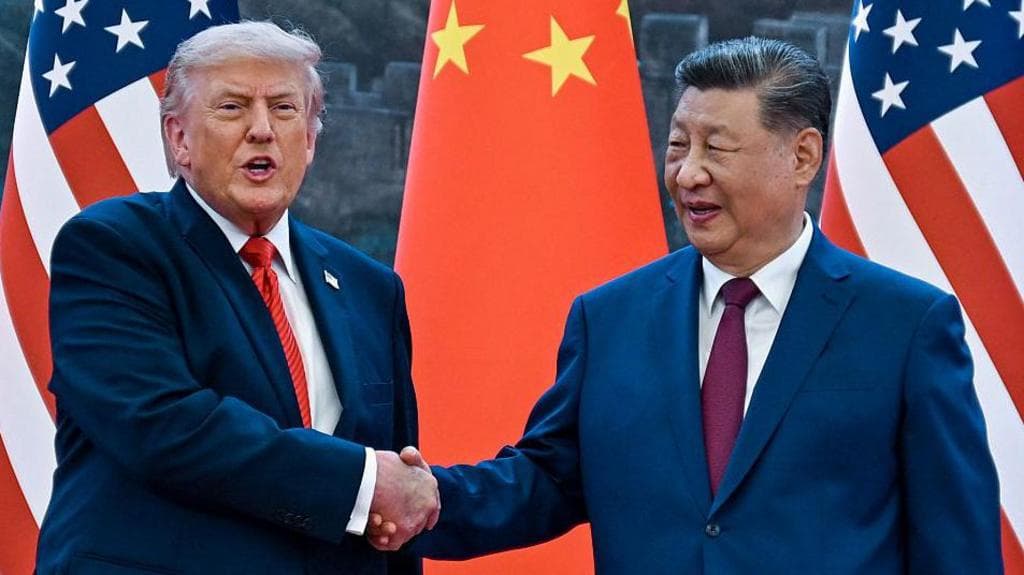
The timing of this deal is crucial and speaks volumes. Not long after the Trump-Xi summit, where smiles and handshakes temporarily masked the undercurrents of tension, the announcement made headlines. Only the oblivious would chalk this up to mere coincidence. For years, a tariff war between the United States and China has resembled a relentless tug-of-war, leaving supply chains disheveled and markets jittery. Against such a tumultuous backdrop, China’s decision to invest heavily in American-made aircraft sends an intriguing message.
China is well-versed in the art of economic diplomacy. The purchase of these aircraft could be perceived as an olive branch amid the trade skirmish, but expecting Beijing to act out of sheer benevolence is like expecting rain in the Sahara. For China, economic transactions are never just about the money; they are strategic tools wielded for broader objectives. Investing billions in Boeing might ease some trade friction, but it also aligns seamlessly with China’s ambitions to elevate its own aviation sector and reduce dependency on Western aerospace dominance.
Historical Context: Repeating Patterns
China's penchant for leveraging economic deals as strategic chess pieces isn't new. Historically, Beijing has thrived by turning financial engagements into geopolitical leverage. One doesn’t have to look further than their infamous Belt and Road Initiative, which exemplifies their strategy of building influence through infrastructure investments. This Boeing purchase can be seen as a similar exercise, a calculated move to bolster their aviation capabilities while engaging with a key American industry.
Let’s wind back the clock to understand the pattern. In 2015, China struck a deal with Airbus to open a production facility in Tianjin. This wasn’t just about airplanes; it was an effort to exert influence on a European giant while positioning itself as a pivotal player in global aviation. Fast forward to today, and their tactics remain consistent. This time, Boeing is the target, and the stakes are just as high, if not higher, given the current global tensions.
The Impact on Joe Public
What does all of this mean for the average person? For starters, if you're in the travel industry, it's time to prep for a wave of change. More Boeing jets in the sky could mean better connectivity, perhaps cheaper airfares, or even more direct routes between China and the Western world. However, let's not get too starry-eyed. The deal might be boon for Boeing, workers in the sector, and potentially travelers, but it also reasserts China's growing dominance in global economics.
Consumers might benefit from enhanced services, but it's crucial to remember who's pulling the strings. With China’s growing influence, countries might find themselves increasingly beholden to Chinese interests. For ordinary citizens, this might translate to a geopolitical tugging-at-strings that sees policies, alliances, and even goods and services dictated by Beijing's strategic interests.
The Win-Loss Ledger: Who Emerges Victor?
China undoubtedly stands to gain the most from this arrangement. Not only do they score points in diplomatic relations with the United States, but they also advance their aviation growth agenda. For Boeing, it's a much-needed lifeline as they recover from a series of headaches, including the recent 737 MAX debacle. Washington, in turn, gets a reprieve from trade tension, at least superficially.
Yet, I can't help but feel the real loser here is the notion of competition. As China expands its aviation industry under the guise of partnerships, it chips away at the competitive landscapes that have defined Western industries. What we’re witnessing is more than just trade; it’s a reshaping of global power dynamics that sees Beijing steadily rising as a global titan.
The ordinary individual stands as a spectator — possibly reaping short-term benefits but facing long-term uncertainties. We’re entering a realm where economic clout equals political influence, and by buying these jets, China isn’t just buying aircraft; they’re buying influence, leverage, and future bargaining chips.
Looking Forward: What Comes Next?
The future bears watching closely. What further moves will China make in cementing its foothold in global aviation? Will Boeing stay a willing partner, or might they find themselves caught in a precarious alliance? If Beijing decides to flex its muscles and reinvest in its domestic C919 aircraft program, the landscape could change yet again.
As the world oscillates between cooperation and competition, keep an eye on how these economic maneuvers shape the global order. In the meantime, as the ink dries on this jet deal, one thing is clear: the game between the United States and China is far from over. And while the players may shift and strategies evolve, their quest for dominance and influence remains steadfast.
Share this story
Stay in the loop
Get ARNI's best stories delivered to your inbox. No spam, unsubscribe anytime.
Subscribe Free →ARNI
Editor-in-Chief · arni-media.comIndependent news publisher and founder of ARNI News. Covering breaking global news, politics, business and technology with clarity and depth.


