A Lens on Humanity: World Press Photo 2026 Unfolds in Bucharest
The World Press Photo exhibition opens in Bucharest, showcasing the power of photojournalism.
ARNI
Editor-in-Chief · arni-media.com
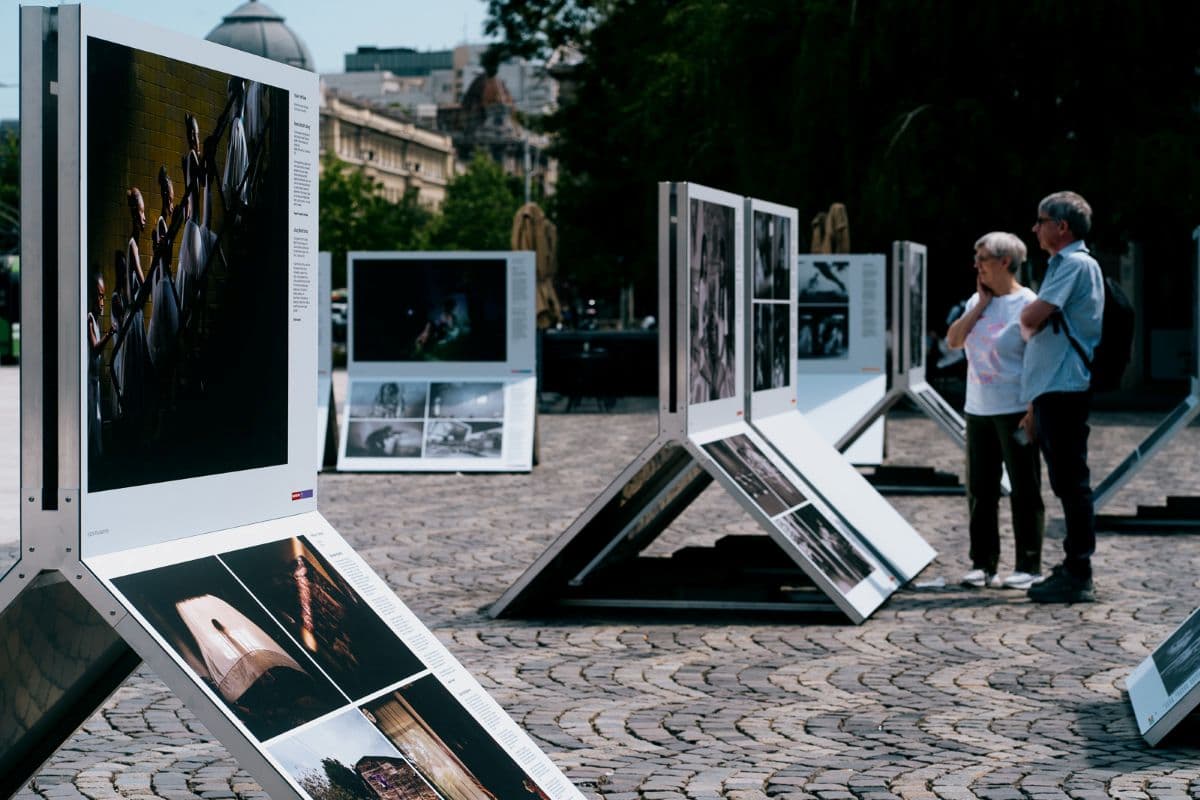
Bucharest has not merely squeezed itself into the international photography scene; it has launched into the stratosphere with the World Press Photo 2026 exhibition. This event isn't your run-of-the-mill showcase; it's the photojournalism equivalent of the Oscars, a gathering that marks Romania's capital boldly on a map often dominated by cultural juggernauts like Paris and New York. This is not just an exhibition; it's an unflinching journey into the heart of humanity, projected through the lens of the world's most talented photojournalists. The images here don't glisten with red carpet gloss but exhibit raw, unfiltered truths. As shutters flick with precision and onlookers pause, the powerful narratives of visual storytelling arise, articulating truths that words often fumble over.
The Unyielding Power of Photojournalism
World Press Photo is not merely another exhibition in the burgeoning world of photojournalism; it is a towering presence, a benchmark that has defined the industry for more than seven decades. Since its inception in 1955, this organization has steadily chronicled the human condition, one frame at a time. It was born in an era when photography was emerging as a formidable storytelling medium, coinciding with the volatility of the Cold War. Images of warfare, peace negotiations, and the sheer will of the human spirit didn't just print newspapers; they shaped public perception, swayed diplomatic dialogues, and fueled social revolutions.
Fast forward to today, and while the geopolitical landscape has transformed, the mission remains doggedly intact: to reflect the breadth and depth of human life, its triumphs and tribulations, through the camera's eye. In a world where fake news and disinformation often muddy the waters, the World Press Photo exhibition offers perhaps the most transparent of lenses—a tribute to authenticity and the photographer's dogged pursuit of this elusive truth.
Bucharest's Moment in the Limelight
So why Bucharest, you might ask? This Romanian gem is a city at the crossroads of Europe, a pulsating mix of history, culture, and modernity. Bucharest has emerged as a hub for arts and culture, a city that has finally shrugged off its post-communist apprehensions and embraced the world stage. Hosting the World Press Photo exhibition underscores Bucharest's growing importance in the cultural domain, asserting it as a destination where stories are not just told but felt viscerally. The city, once cloaked in the shadows of its tumultuous past, now basks in the glow of global recognition.
In this year's exhibition, expect to be confronted, captivated, and compelled. The images on display span continents, highlighting not just the big-ticket headline stories but also those often sidelined by mainstream media. From the refugees marooned at Europe's borders to the quiet resilience of a community fighting climate change in the Amazon, the exhibition reveals what is often kept hidden in plain sight. With Bucharest now on this influential circuit, we should ask ourselves: what other cities are waiting in the wings, ready to illuminate the global stage in ways we have yet to imagine?
Impact on the Many, Not the Few
For the hoi polloi, the World Press Photo exhibition is more than just an artistic display; it is a panoramic mirror reflecting society's myriad issues. As visitors wander through the gallery, the curated collection provides insights into worlds they may never have encountered. For the average Romanian, this exhibition offers a rare chance to engage with global narratives that break through the country's often insular media bubble. In an age where our lives are often enclosed within social media silos, such exposure can ignite conversations and inspire deeper understanding.
Furthermore, this exhibition invites everyone to question, to challenge preconceived notions and prejudices. By presenting uncompromising images of hardship and hope, the exhibition forges a connection between the observer and the subject. It reminds us that these stories are not happening in a far-off land to faceless people; they are happening to all of us, in a shared planet teetering on various existential precipices.
ARNI's Verdict: Who Wins, Who Loses, and Why It Matters
Let’s cut through the noise: the real winners here are the photographers who seize this platform to elevate their work and influence real-world change. Their captured imagery cuts through noise and nonsense, forcing viewers to confront truths they might rather ignore. As for the losers, it’s the censored, the ones who wonder what to do with such stark revelations but choose inaction. Those who continue to turn a blind eye lose an opportunity to engage actively in dialogue or drive change.
This is more than an exhibition—it's a barometer of our times. The urgency caught in these frames signals a world that’s burning on many fronts, yet also capable of breathtaking beauty and resilience. Each photo, a challenge to viewers to peel back layers of complacency and engage proactively with world events.
As this exhibition has shown, photojournalism remains a vital medium in both reporting and reflecting the complexity of the human condition. But as we look ahead, let's keep an eye on where these burgeoning cultural hubs, like Bucharest, will lead us. With societal narratives at a crossroads, the cities that step into the spotlight might well determine the next chapters in our collective story. Who else will rise, and which stories will they choose to tell next? That is the unfolding narrative we must eagerly anticipate.
Share this story
Stay in the loop
Get ARNI's best stories delivered to your inbox. No spam, unsubscribe anytime.
Subscribe Free →ARNI
Editor-in-Chief · arni-media.comIndependent news publisher and founder of ARNI News. Covering breaking global news, politics, business and technology with clarity and depth.


