Trump Touches Down in China: High-Stakes Talks on Trade and Taiwan Loom
As Trump meets Xi, the stakes are high with trade tensions and Taiwan politics on the table.

ARNI
Editor-in-Chief · arni-media.com
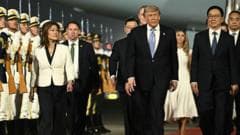
Donald Trump made a dramatic arrival in China, a nation where every political move is scrutinized like a chess game that could redefine the global landscape. Far from his days in the Oval Office, Trump's swagger remains intact as he steps onto Chinese soil for talks with President Xi Jinping. This is not a mere reunion of seasoned leaders; it’s a high-wire diplomatic act where errors could cost lives and billions in trade.
The Trump Tact: Brash Diplomacy Strikes Again
Trump is no stranger to grandstanding his way through international negotiations. His approach is a peculiar mix of business acumen and confrontational diplomacy—akin to bringing a sledgehammer to crack a nut. The art of the deal, according to Trump, involves demanding more while giving as little as possible. The stakes this time? Trade and Taiwan. Two issues that could either redefine his legacy or bury it under a mountain of geopolitical miscalculations.
Trump's arrival in China is marked by the same bravado that characterized his presidency. He’s a statesman with a reality TV star’s flair, both reviled and revered for his ‘America First’ stance. His agenda is clear: get Beijing to loosen its notorious grips on trade and tread carefully on the delicate matter of Taiwan. Failure to secure any significant movement could see him return to the U.S. with little more than a pressed suit and a heady mix of criticism and bemusement.
Trade Tensions: More Than Just Numbers
Trump's visit centers on pushing China to open up its markets more than ever before, echoing a demand that has long frustrated many U.S. administrations. However, Trump’s insistence comes wrapped in economic nationalism and a flair for the dramatic. With a trade deficit that balloons into the hundreds of billions, the U.S. has been hankering for a reset.
Remember the 1980s trade tension between the U.S. and Japan? Back then, the two nations locked horns over similar economic disparities, resulting in an intricate, ongoing dance of negotiations and retaliations. Fast forward to today, the script seems familiar albeit with more zeros attached and higher stakes. Unlike the bilateral nature of U.S.-Japan talks, today’s global economy is a web that easily snares countries in unintended consequences.
Trump's track record with tariffs—taxes he used as leverage like an iron scalpel—has been a mixed bag of results. Yet here he stands again, demanding China concede on unfair tariffs and regulations shackling American businesses. The question is not whether he’s right to demand change, but whether his bombastic style will yield results or alienate potential allies in the global economy.
Taiwan: The Cross-Strait Dilemma
And then there’s Taiwan, the perennial thorn in China's side and a flashpoint that could ignite at any moment. Taiwan isn't just a diplomatic quagmire; it's a potential frontline in an ideological war. While Trump is known for his transactional approach, Taiwan requires more than just a demand-and-concession strategy.
Calling Taiwan a diplomatic powder keg isn't hyperbole. If Trump chooses to champion Taiwan’s interests too forcefully, he risks provoking China into drastic actions, potentially destabilizing the region. Xi, a leader with a penchant for projecting strength, could use any affront on Taiwan as a rallying cry for domestic support.
The 1995–96 Taiwan Strait Crisis serves as a chilling reminder of the volatility at play here. It revealed the tightrope that U.S. leaders must tread. Trump's current stance on Taiwan remains a precarious balance between support for Taiwanese democracy and the reality of Beijing’s formidable influence.
What Does This Mean for You?
While Trump and Xi tango on the world stage, ordinary citizens might wonder what this political theatre means for their daily lives. In short, plenty. Trade tensions reverberate beyond stock markets and GDP figures, seeping into consumer prices and job markets.
If Trump’s trade demands fail, brace for prospective tariffs that could make American-made goods pricier while foreign competitors swoop in to fill the void. For the working class and businesses, it’s a bleak prospect of either layoffs or increased import costs. Meanwhile, for those with eyes on Taiwan, a failure to diplomatically navigate this issue could lead to military tensions—adding fear and uncertainty to a world already reeling from global disruptions.
So who wins and who loses in this diplomatic saga? Should Trump succeed, he’s the hero of the hour—at least among his loyal followers—potentially redirecting economic flows and restoring a form of balance. Should he fail, the American public pays the price in economic downturns and geopolitical instability.
As the curtains lift on these talks, the world watches closely. Will Trump’s theatrics pay off, or will they unravel the delicate threads keeping global peace precariously suspended? Keep an eye on Beijing’s response and Taiwan’s future as they move beyond these negotiations. In the end, the real test will be whether the world is left safer or more aligned on the other side of Trump's high-stakes gambit.
Share this story
Stay in the loop
Get ARNI's best stories delivered to your inbox. No spam, unsubscribe anytime.
Subscribe Free →ARNI
Editor-in-Chief · arni-media.comIndependent news publisher and founder of ARNI News. Covering breaking global news, politics, business and technology with clarity and depth.


