Starmer Sets the Stage for British Steel's Nationalisation
Labour leader Keir Starmer plans to push for the nationalisation of British Steel this week, reigniting a fierce debate on public ownership.

ARNI
Editor-in-Chief · arni-media.com
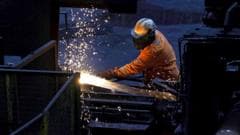
Keir Starmer is marching headlong into British politics with the fervour of a man on a mission. The Labour leader has announced a bold initiative to nationalise British Steel, rekindling an age-old debate on the merits and pitfalls of public ownership. This isn't merely an intervention to rescue a beleaguered industry; it is a declaration of a new era in economic policy where the state, rather than the market, wields the power to shape the nation's industrial destiny.
A Relic of Industrial Glory
British Steel, once the towering giant of the UK's industrial landscape, stood as a testament to Britain's capability and ambition during the heydays of the Industrial Revolution. It was the bedrock upon which the Empire forged its global dominance. However, the passage of time has not been kind. Decades of financial mismanagement coupled with an inability to compete with international steel giants have left this once-mighty titan a husk of its former self.
The company spiralled into insolvency in 2019, a poignant symbol of the broader decline of British industry. Energy costs soared, competition from cheaper imports increased, and the uncertainties of Brexit added yet another layer of complexity. Government interventions since then have amounted to little more than temporary reprieves, akin to patching a sinking ship with duct tape.
Starmer's Gamble: Reclaiming Labour's Legacy
Starmer’s nationalisation proposal is nothing short of a political gambit, one that echoes Labour's storied history of public ownership. This move is set to redefine the party's economic strategy, harking back to the post-war era when nationalisation was championed as the bedrock of rebuilding the economy. Starmer appears willing to embrace this mantle, betting that a return to state-led development will resonate with voters disillusioned by years of austerity and privatisation.
But Starmer isn’t just banking on nostalgia. He’s making a pragmatic argument that nationalisation could shield British Steel from the whims of global market forces, stabilising the industry and preserving jobs. While critics will argue this approach is outdated or even unfeasible, Starmer is playing a long game, hoping to convince the public that some industries are simply too strategic to fail.
The Stakes for Everyday Britons
So, what does all this mean for the average British citizen? In theory, nationalising British Steel could safeguard thousands of jobs, not only in the steelworks themselves but also in the supply chain and related sectors. Steel is integral to many industries, from automotive manufacturing to construction, and stabilising its production could have ripple effects across the entire economy.
However, the spectre of increased taxes looms large. Nationalisation requires funding, and that typically means the government will have to dip into public coffers—read: your wallet. There's also the question of efficiency. State-owned enterprises have a notorious reputation for being sluggish and bureaucratic. If nationalisation is mishandled, the public could end up paying more for a service that delivers less.
Winners, Losers, and the Bigger Picture
In this high-stakes chess game, who stands to gain and lose? Labour supporters are likely to see this as a much-needed shot in the arm for a party seeking to distinguish itself as the champion of the working class. Industries reliant on steel might also breathe a collective sigh of relief, envisioning a more predictable and sustainable supply chain.
Conversely, those wedded to the idea of free-market economics will decry this as a regressive step, a throwback to a time when state control stifled innovation and efficiency. The nationalisation of British Steel could also send shivers down the spine of other industries, worried they could be next on the public ownership chopping block.
From the outside, international competitors may view this as the UK closing ranks, a protectionist move that could inspire retaliatory measures. A newly nationalised British Steel could disrupt the European and global steel markets, stirring the pot of international trade relations.
As we look forward, what should we expect next? Starmer's proposal must navigate the treacherous waters of parliamentary approval, stakeholder negotiations, and public opinion. The coming months will reveal whether his bold vision for British Steel is a herald of widespread policy change or merely a flash in the political pan.
The outcome of this nationalisation bid will likely serve as a bellwether for the future of British economic policy. If successful, it could pave the way for more industries to return to public ownership, reshaping the landscape of UK industry for generations. Keep an eye on the debates, and prepare for a potential economic upheaval masquerading as hope for a brighter, steelier future.
Share this story
Stay in the loop
Get ARNI's best stories delivered to your inbox. No spam, unsubscribe anytime.
Subscribe Free →ARNI
Editor-in-Chief · arni-media.comIndependent news publisher and founder of ARNI News. Covering breaking global news, politics, business and technology with clarity and depth.


