US-Iran Tensions Flare: Strikes Threaten Fragile Peace Talks
The US delivers firepower amid a shaky truce, sparking questions about the path to peace.

ARNI
Editor-in-Chief · arni-media.com
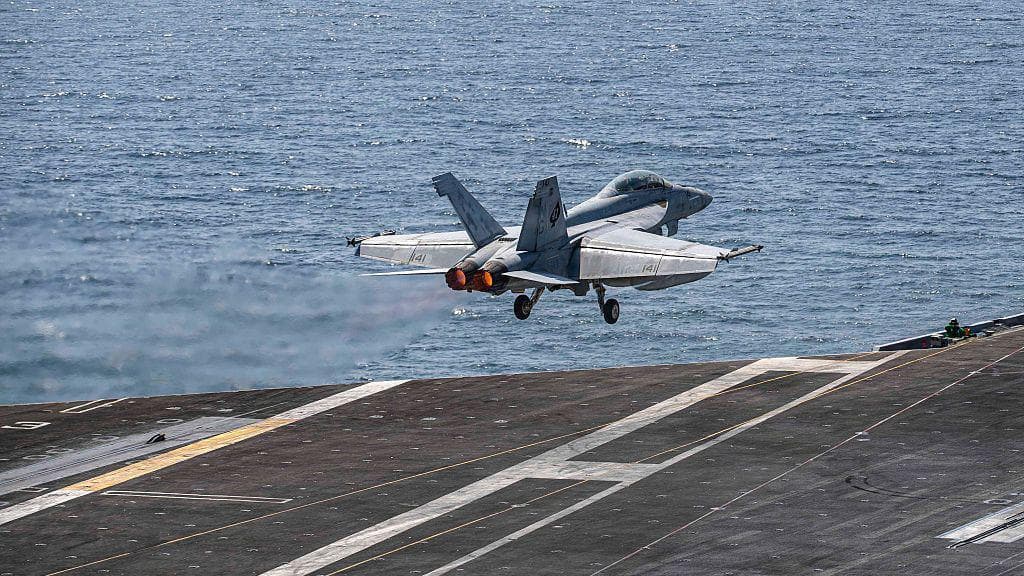
The United States has unleashed its military might on Iranian targets for the second time in just three days, shaking the already tenuous ceasefire between the two nations. With tensions simmering like a pot ready to boil over, these attacks spotlight the treacherous road towards resolving the three-month conflict.
America's Aggressive Defence Strategy
American military strategists seem intent on flexing their muscles, and not just in the gym. The decision to strike Iranian targets again suggests the US is doubling down on its aggressive posture. Presumably, the idea is to serve up a cocktail of deterrence with a dash of discipline. But at what cost?
These strikes aren't merely a show of power; they are a stark reminder that the US will not stand idly by while its interests are threatened. This approach, however, risks escalating the situation, potentially dragging the region into a more prolonged conflict.
Experts argue that the US's repeat offensives may, in fact, harden Iranian resolve, making Tehran less likely to play nice in the ongoing negotiations. Hardly ideal when you're trying to broker peace. But then again, diplomacy has never been the most straightforward path with volatile nations at the table.
The Fragile Ceasefire
Let's talk about the ceasefire—if you can even call it that without wincing. A truce as fragile as glass, every little tremor threatens to shatter it. The US and Iran had allegedly put down their arms to facilitate discussions aimed at ending the skirmish that has plagued them for three long months.
However, truce-talks without trust are about as useful as a chocolate teapot. The distrust runs deep; both sides are as jumpy as cats in a room full of rocking chairs. And now, with these renewed hostilities, the entire ceasefire could be trundling headlong into the rubbish bin of failed attempts.
Previous attempts to mend fences have been fraught with diplomatic faux pas and posturing from both sides. The stakes are high, and the margin for error is slim. This ceasefire was never meant to last forever, but one would hope more than a few fireworks could be avoided on the road to negotiation.
The Historical Soap Opera
The US and Iran have a history as tangled as a bowl of spaghetti. Since the 1979 Iranian Revolution and the subsequent hostage crisis, the two nations have eyed each other with suspicion and disdain. Any hint of reconciliation has usually been overshadowed by mutual distrust and geopolitical chess games.
Over the years, numerous US presidents and Iranian leaders have tried their hand at bringing some semblance of peace. Yet, each effort seems to collapse under the weight of its own ambition and a plethora of unmet conditions.
Fast forward to today, and history appears on the brink of repeating itself. The latest round of hostilities threatens to catapult both nations back to the bad old days of tit-for-tat exchanges, all while trying to convince an international audience that they're genuinely interested in peace.
Future Tensions and Potential Resolutions
So, what does the future hold for this storied conflict? The stakes are as high as ever. If this isn't resolved, we're looking at a potential escalation that could have devastating ripple effects throughout the Middle East.
The world is watching, as are the myriad stakeholders with fingers in this particularly messy pie. Israel and Saudi Arabia, for instance, have vested interests in how this unfolds, each with their own agendas that will undoubtedly influence any peace talks.
The immediate challenge for both the US and Iran will be calming the current storm enough to return to the negotiation table. Yet, like a rogue wave in a tempestuous sea, these recent strikes complicate the picture, raising questions about who holds the upper hand in this precarious dance.
Watch this space for more abrupt turns in the US-Iran saga, as both sides try their hand at the balancing act of aggression and diplomacy. The world waits to see if restraint can tip the scales towards peace, or if we've only just begun a new act in this ongoing geopolitical drama.
Share this story
Stay in the loop
Get ARNI's best stories delivered to your inbox. No spam, unsubscribe anytime.
Subscribe Free →ARNI
Editor-in-Chief · arni-media.comIndependent news publisher and founder of ARNI News. Covering breaking global news, politics, business and technology with clarity and depth.


