Trump's Sharp Warning to Taiwan: A Tenuous Balance Amid Rising Tensions
In a bid to ease tensions, Trump cautions Taiwan against independence following critical talks with Xi Jinping.

ARNI
Editor-in-Chief · arni-media.com
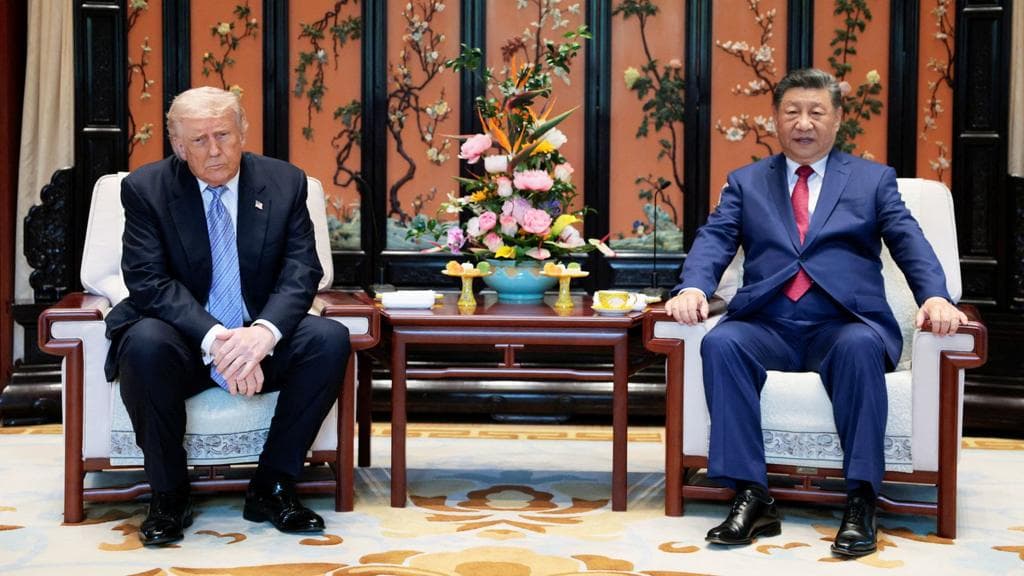
Trump's Sharp Warning to Taiwan: A Tenuous Balance Amid Rising Tensions
Donald Trump isn't someone who disappears quietly into the political night. Like a stage performer always primed for the next act, he has thrust himself back into the geopolitical limelight with a calculated swipe at Taiwan. In a statement that is as much a diplomatic bombshell as it is a warning, Trump has cautioned Taiwan against seeking independence. This pronouncement follows his discussions with China's President Xi Jinping, conversations that can only be described as stormy. Far from being a mere flippant comment, Trump's intervention is a chess move in the intricate game of global politics—one that could reverberate through international relations for years.
The Historical Entanglement of Taiwan
Even the briefest glance at Taiwan's past reveals a tangled history that makes the current situation fraught with tension. Taiwan's status has been a subject of contention since the end of World War II. The island became a refuge for Chiang Kai-shek’s Nationalist forces after their defeat in the Chinese Civil War in 1949, thus separating itself from the Communist regime of mainland China. Despite its geographical proximity to China—it's merely 120 miles away—Taiwan has carved out an identity as a thriving democracy, complete with regular elections and a robust judicial system. Yet, this independence operates under the shadow of Beijing’s ceaseless claims over the island.
The United States enters this story as the juggler balancing fragile eggs. Through its policy of "strategic ambiguity," America has supported Taiwan's self-defence while officially recognizing the One China policy. This delicate balance resembles walking a geopolitical tightrope. However, Trump's recent comments could be seen as tipping this precarious balance, causing consternation not only in Taipei but in Washington too.
Trump and Xi: A Diplomatic Firestorm
Trump’s approach to diplomacy has always been unorthodox, often unpredictable. His recent dialogue with Xi Jinping was no different. The meeting between these two giants of modern politics comes against a backdrop of strained relations, trade tensions, and military manoeuvres in the South China Sea. For Trump, this is not merely about Taiwan but a broader chessboard of power, influence, and trade.
Xi Jinping, on the other hand, is not a man who backs down easily. His China dreams involve reasserting China's role on the global stage, which includes reunifying Taiwan. Trump's warning to Taiwan could therefore be interpreted as a direct challenge to Xi’s ambitions. This is where Trump’s unpredictable tactics meet Xi’s strategic long-game, creating a diplomatic firestorm that has all the makings of a political thriller.
What This Means for Ordinary People
Amid these high-stakes political games, ordinary citizens are the real pawns. For the people of Taiwan, America's diplomatic messages are part of an existential balancing act. The island’s economic prosperity and democratic freedoms are at risk if tensions with China escalate. The average Taiwanese citizen must weigh the dream of formal independence against the tangible threats of military and economic repercussions from Beijing.
In the West, Americans and Europeans alike may wonder why a far-off island should matter to their daily lives. Yet, Taiwan is a cornerstone of the global tech industry, responsible for producing the majority of the world’s semiconductors. A conflict in Taiwan isn’t just a regional concern—it has the potential to disrupt global supply chains, affecting industries from smartphones to automotive production. In short, what happens in Taiwan doesn’t stay in Taiwan.
The Winners, the Losers, and What It Really Means
In the blunt world of realpolitik, few emerge unscathed from such geopolitical tussles. If Trump wins by solidifying his stance as a diplomatic maverick, then Xi’s loss will be the perceived inability to control what China considers a domestic issue. Conversely, if Xi uses this opportunity to bolster his narrative of Western interference, then Trump risks appearing reckless on the international stage.
At the end of the day, the real losers could be the people of Taiwan, caught in the crossfire of superpower posturing. They stand to lose their hard-won democratic freedoms if the situation devolves into conflict. And let’s not forget the global economy—a casualty-in-waiting if the world’s tech hub is destabilized.
As for what this signals, it serves as a reminder that in the theatre of international relations, the curtain never really falls. This is a play with many acts, and it’s a guarantee that Trump, never one to shy away from the spotlight, will have another monologue up his sleeve.
Looking Ahead
As we look to the future, keep an eye on how the major players maneuver in this geopolitical chess game. Will Biden, Xi, and other world leaders seek conciliation and avoid conflict, or are we poised on the brink of escalation? Watch for movements in military presence in the region, shifts in trade policies, and the rhetoric from Beijing and Washington. One thing is certain—global watchers will have plenty to speculate about as this drama unfolds.
Share this story
Stay in the loop
Get ARNI's best stories delivered to your inbox. No spam, unsubscribe anytime.
Subscribe Free →ARNI
Editor-in-Chief · arni-media.comIndependent news publisher and founder of ARNI News. Covering breaking global news, politics, business and technology with clarity and depth.


