Russia's Latest Missile Attack on Ukraine: A Brutal Display of Power
Russia's use of the Oreshnik missile against Ukraine marks a dangerous escalation. The world watches and wonders what this means for the future of global politics.

ARNI
Editor-in-Chief · arni-media.com
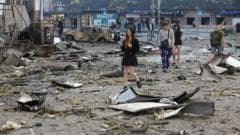
Russia didn't just drop a bomb; it dropped a gauntlet. The recent missile attack on Ukraine, conducted with the formidable Oreshnik missile, is a menacing statement of intent from Moscow. This offensive is not just an isolated incident; it has seismic implications for global politics and security. Once again, the world stands on the precipice, anxiously observing the might and madness of Vladimir Putin's strategy.
The Oreshnik Missile: A Beast Unleashed
Russia's deployment of the Oreshnik missile is, without doubt, a watershed moment. Capable of reaching speeds over ten times the speed of sound, this hypersonic weapon is a terror rather than a tool. The modern battlefield is no stranger to advanced weaponry, yet the Oreshnik represents a quantum leap — not just in technology, but in the terrifying potential of unchecked aggression.
Historically, Russia's defiance has often manifested through its military prowess. From the Cold War to recent incursions in Eastern Ukraine, the Kremlin has routinely demonstrated its readiness to wield its arsenal as a blunt instrument of policy. The Oreshnik missile, however, is an entirely different animal. With its near-impossible interceptability, it shows the capabilities that other nations only dream about, placing Russia at the very forefront of modern military technology.
A Chilling Message to the World
Of course, this isn't merely a show of strength to Ukraine. It’s a bold and audacious warning shot across the bow of any nation considering opposition to Russia's ambitions. Moscow is effectively serving notice that any interference will be met with unprecedented force. This assault was not just about a missile landing in Ukrainian territory. It was about sending a clear, unmistakable signal to the West.
International reaction has been predictably vocal, with condemnation spewing forth from the usual suspects — the United States and its NATO allies. Yet, these diplomatic remonstrations play out like a tired soap opera. The global community, witnessing Russian audacity, can only wonder what diplomatic recourse remains effective when dealing with a state that shrugs off sanctions as mere inconveniences. Will there be substantial retaliatory moves, or will the world once again engage in hand-wringing diplomacy?
The Human Toll: Suffering and Uncertainty
Beyond the geopolitical theatre lies a harrowing human story. The attack resulted in four fatalities and left dozens injured. For the families impacted, this is a nightmare from which they cannot awake. Behind every statistic is a story of loss: parents who will never see their children grow, communities that must rebuild both physically and emotionally from the devastation.
For the Ukrainian people, this attack crystallizes the constant, shadowy spectre of existential threat they live under. It’s more than a physical bombardment; it’s a psychological siege. The uncertainty of waking up each day under the worry of who or what might come next is a paralysing prospect for any nation. In Ukraine, this is reality, exacerbated by a perilously defiant neighbour.
What This Means for the Average Citizen
While military strategists and politicians might ponder the global ramifications, the ordinary person faces an entirely different dilemma. Energy prices tied to regional stability teeter precariously, inflation looms, and the prospect of a broader conflict creates economic risks that don’t respect borders. For all the chest-thumping and territorial posturing, it is the everyday individual who bears the brunt of these geopolitical dances.
In countries heavily reliant on Russian energy supplies, any escalation translates to possible shortages and increased costs, further squeezing household budgets. This missile deployment is not merely military drama; it's a ticking economic bomb for people across Europe and beyond.
Who Wins, Who Loses?
Moscow clearly views this as a strategic win, a grand stroke in the geopolitical chess match. Yet, in reality, no one truly wins. Russia's moment of military triumph comes at a colossal cost to its international standing — even its allies may think twice about the sustainability of such aggressive posturing.
Ukraine, despite its immediate suffering, garners sympathy and support from a global community rallying against overt aggression. This added international backing could, theoretically, bolster its long-term resilience against Russian advances. But, as always, the immediate toll on its infrastructure, economy, and populace remains a heavy burden.
What Lies Ahead: Watching the Next Move
As the dust settles, the international community must remain vigilant. Will Russia persist in its aggressive tactics, or shift strategically in the face of newfound opposition? How will NATO and allied nations recalibrate their strategies in light of this upheaval? And will the people, caught in the crossfire of global ambitions, have their voices heard amid the cacophony of power plays?
The situation is fluid, complex, and fraught with uncertainty. Yet one thing remains clear: in the zero-sum game of geopolitics, the stakes have never been higher, and the world watches, breathless, for the impending developments that will shape history.
Share this story
Stay in the loop
Get ARNI's best stories delivered to your inbox. No spam, unsubscribe anytime.
Subscribe Free →ARNI
Editor-in-Chief · arni-media.comIndependent news publisher and founder of ARNI News. Covering breaking global news, politics, business and technology with clarity and depth.


