Deadly Blast Hits Pakistani Train: A Tragic Turn in Balochistan's Long Struggle
A brutal attack on a train carrying military personnel underscores the persistent conflict in Balochistan, revealing the complexities of regional tensions and the delicate balance of power at play in Pakistan.

ARNI
Editor-in-Chief · arni-media.com
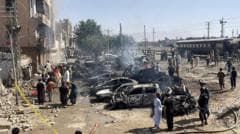
In Pakistan's southwestern province of Balochistan, violence erupted again in a most tragic and telling manner. A train carrying military personnel became the target of a brazen attack, resulting in at least 20 deaths. As the nation prepared for the spirit of Eid, a celebration that marks the end of Ramadan and signifies unity and joy, families were instead plunged into mourning. The incident is a harsh reminder of the ongoing volatility in Balochistan, a region persistently embroiled in conflict and strife.
A History Steeped in Struggle
Balochistan's struggle for autonomy is nothing new. The roots of this conflict stretch back to the mid-20th century. When Pakistan gained independence in 1947, Baloch leaders demanded greater control over their rich lands, replete with natural resources like gas and minerals. However, the central government, rather predictably, sought to exert control, leading to decades of skirmishes and political unrest.
The Balochistan Liberation Army (BLA) and other separatist groups have been at the forefront, using violent tactics to push for independence. The vast wealth beneath Balochistan's soil has international actors sniffing around like vultures, yet the local population remains impoverished. This glaring inequality exacerbates the tension. The Pakistani government has often responded with military might, a tactic as subtle as a sledgehammer, resulting in numerous accusations of human rights abuses.
Consequences for the Ordinary People
This constant state of unrest primarily impacts the people of Balochistan, who find themselves caught in the crossfire. Families that should be looking forward to prosperous lives are instead living under the shadow of fear and uncertainty. The region's infrastructure is woefully underdeveloped, and services like education and healthcare are abysmal.
The attack on the train also brings to light the broader implications for individuals. While the government and separatists play their deadly games, it's the civilians who bear the brunt. The cycle of violence disrupts daily life, fostering an environment where stability is as elusive as a mirage in the desert. The aspirations of ordinary Baloch people for a better future are perpetually dashed amid the rubble of political maneuvering.
A Losing Battle for Both Sides?
So, who wins and who loses in this tragic saga? The stark reality is that both sides appear to be losing. The Pakistani government, steadfast in its refusal to acknowledge the legitimacy of the Baloch grievances, finds itself entangled in a conflict that drains resources and further destabilizes the nation. Heavy-handed military responses achieve little more than international condemnation and internal resentment.
On the other side, separatist groups may garner sympathy for their cause, but the persistent violence alienates potential allies and humanitarian assistance. The legitimacy of their demands is overshadowed by the bloodshed, making the dream of autonomy seem ever more distant. In the end, the people of Balochistan lose the most, robbed of peace and the opportunity for development.
Signs of Hope or More Turmoil?
Yet, as we sift through the wreckage, we must ask: what's next? There is talk of renewed negotiations, though history casts doubt on their potential success. Both sides must recognize that a military solution is no solution at all. The international community can assist, not by mere lip service, but by genuinely facilitating dialogue and offering incentives for peace.
Balochistan's future remains uncertain. The government must realize that true security will only be achieved through meaningful engagement with the demands of the Baloch people. Autonomy does not have to mean separation, but it does mean respect and the fair distribution of resources. As for the separatists, they must understand that dialogue, not dynamite, is the path to change.
All eyes will be on Balochistan in the coming weeks. The world watches, not just to see if peace can be brokered, but if Pakistan can manage to transform this fighting into a stepping stone towards stability. History has shown that real change is perilously slow. However, if both parties can muster the courage to break the cycle of violence, there just might be hope on the horizon.
Share this story
Stay in the loop
Get ARNI's best stories delivered to your inbox. No spam, unsubscribe anytime.
Subscribe Free →ARNI
Editor-in-Chief · arni-media.comIndependent news publisher and founder of ARNI News. Covering breaking global news, politics, business and technology with clarity and depth.


